
How Empathy Kept Me Alive
This is a real story about depression, emotional struggle, and how empathy became the one thing that kept me going when I didn’t think I could anymore.
I didn’t know it at the time, but empathy is what kept me alive.
Not strength.
Not discipline.
Not having everything figured out.
Empathy.
“What does depression feel like?”
You don’t want to live, but you don’t want to die. You don’t want to talk to anyone, but you feel incredibly alone. You wake up in the morning and just wait for the night to come.There was a night in my early twenties I’ll never forget.
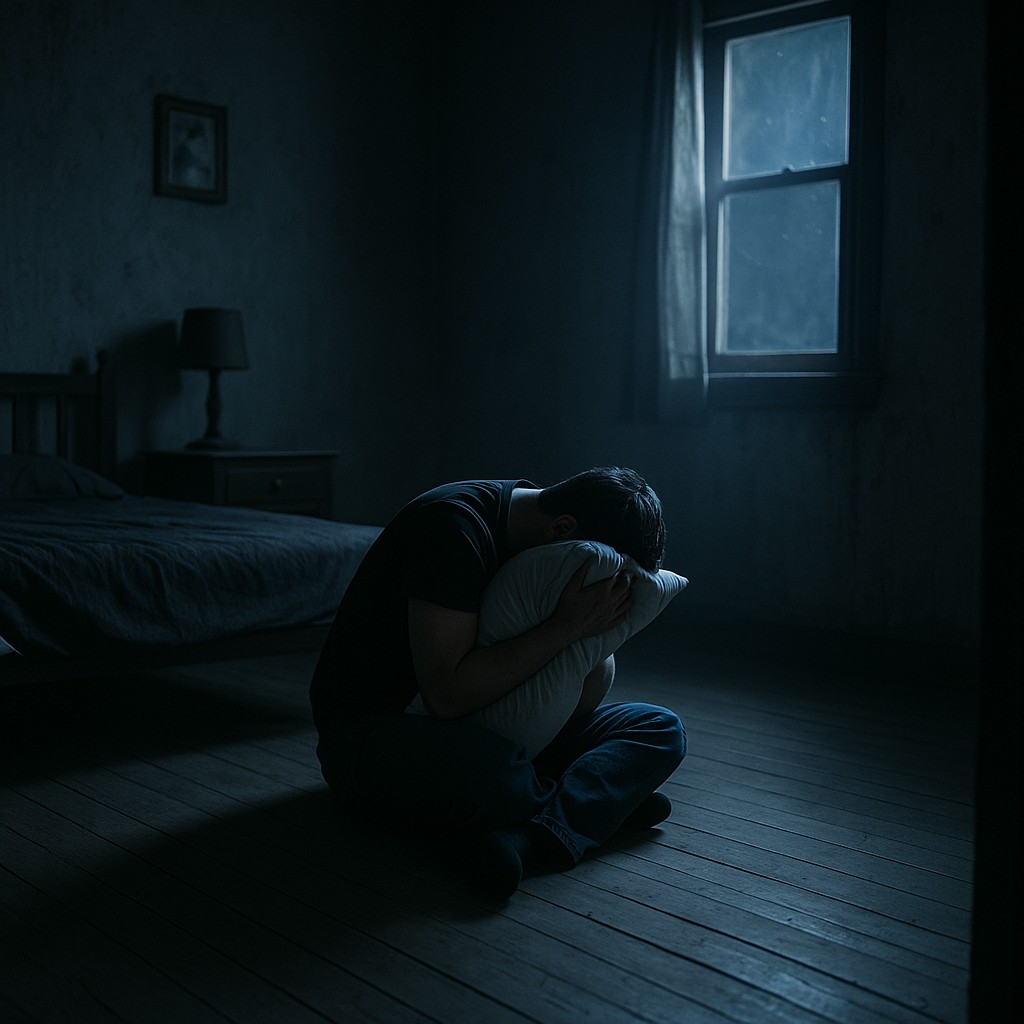
I was lying on the floor of my bedroom, face pressed into a pillow, sobbing hard enough to shake.
I held that pillow like it was the only thing keeping me alive.
And maybe, in some way… it was.
I didn’t want anyone to hear me—so I buried the sound.
That’s something depression teaches you:
how to cry quietly so the world doesn’t notice you’re breaking.
And after a while… you start to believe no one would understand anyway.
I remember what that felt like.
If you’re struggling right now, you’re not alone. I know how real that feeling is. If you need someone to talk to, you can find help here (988 Lifeline).
I had just been rejected by someone I cared about. She chose a friend of mine instead, and even though he never knew how much it affected me, things like that always seemed to happen to me. It wasn’t just about her. It was everything. It was years of trying too hard, loving too deeply, hurting too often.
The Weight of Feeling Everything
When I was a kid, my mom used to joke that I was too sensitive.
She’d say it lightheartedly, not in a mean way—just something like,
“You feel everything, don’t you?”
And I did.
I always have.
I didn’t know it back then, but that sensitivity was both my greatest strength and my heaviest burden. I felt my pain. I felt other people’s pain. And I couldn’t keep it to myself—I had to share it.
Talking about how I felt was the only therapy I had.
Not for attention.
I just didn’t know how else to carry it all.
Still, that label—“too sensitive”—got in my head. In the world I grew up in, soft boys didn’t get far. You were either tough or a joke. And even though I wore my heart on my sleeve, I believed I was weak. But here’s the truth I only figured out years later:
I wasn’t soft. I was steel wrapped in emotion.
I was carrying more than most people could see—and surviving it.
The Early Grief That Shaped Me
When I was three, we lost my baby brother.
He was just a little thing—not even old enough to speak in full sentences.
My mom lived in the hospital during the last six months of his life.
I don’t remember much…
but I remember her eyes.

There was always sadness behind them—even when she smiled.
That kind of loss doesn’t disappear.
It just becomes a quiet part of you.
But there was strength in her too.
She never gave up on life.
She never stopped loving the people around her.
And that strength…
planted something in me.
Something I didn’t fully understand until much later.
I Tried to Numb It… and Found Chaos Instead
As I got older, that weight I carried became harder to explain.
I didn’t have the words for it.
And honestly… I didn’t want to deal with it.
So I leaned into the things that helped me escape.
Drinking.
Partying.
People.
Being alone with my thoughts was like sitting in a locked room with a cruel voice in my head.
So I avoided silence.
I chased distraction.
I clung to being around people—anyone—just to fill the space inside me.
At first, it worked. Alcohol gave me a break from feeling too much. Nights out meant I didn’t have to think about what was really wrong. But the relief never lasted. The hangovers got heavier—not just physically, but emotionally. I started getting into trouble, making bad decisions, and putting too much of my emotional weight on friends who didn’t sign up for it.
I wasn’t just trying to have fun.
I was trying to survive.
I thought if I was around people, I wouldn’t feel so empty. But you can still feel alone in a crowded room—especially when you’re the one making everyone laugh just to hide your own pain.
One of the nights that still sticks with me
is the first time I ever went to jail.
We were all partying—my friends, my brother…
just another night that started out like a hundred others.
At some point, my brother got into it with a group of guys from another town over a girl. Next thing I know, I’m being shaken awake to go fight. We piled into the car, drove across five towns, drunk and running on nothing but bad decisions and adrenaline.
When we got there, it was six of us against at least twenty-five of them. And somehow… we still fought. It was chaos—swinging, yelling, bodies everywhere. We even knocked one guy’s tooth out. But the part that sticks with me isn’t the fight—it’s what came after.
They got to run. We didn’t. We had driven there, so we were stuck in the parking lot when the cops showed up.
One of the officers wasn’t even in uniform, but he came in swinging—literally—hitting my friend with a nightstick and spraying him. I yelled at him, still drunk, not thinking. He turned on me and swung. I threw my hand up to block it, and somehow the nightstick caught in my hand and I ended up taking it from him. For a second, everything just froze. He told me to give it back. I told him I would—if he agreed not to swing it at me again. And he did. So I handed it back.
We walked over to the cruiser without cuffs, no resistance. I thought that mattered.
Months later, it didn’t.
He showed up in court in a sling, claiming we assaulted him, that he had pinned me against a car for five minutes waiting for backup. None of it was true. But he said it confidently. Like it was.
That night changed something in me. Not because I got in trouble—I knew I was wrong for being there, for fighting, for being drunk. But because it was the first time I realized something deeper… that not everyone, even people in authority, are who you think they are. That people can lie, and sometimes the truth doesn’t matter as much as who’s telling the story.
I took the worst punishment out of all of us that night. Maybe because I took that nightstick from him. Maybe because I embarrassed him. I’ll never know for sure. But I’ve thought about it more times than I can count.
How many other people had their story rewritten like that.
How many other lives got shaped by something that wasn’t true.
I Made Everyone Laugh… So No One Saw the Pain
I became the funny guy.
The guy who could make you laugh when you were having a bad day.
And I genuinely loved doing that.
I loved seeing people smile.
It made me feel useful…
needed…
maybe even loved.
But humor was also my shield.
If I could make you laugh,
you wouldn’t see the darkness in my eyes.
You wouldn’t see how broken I felt inside.
We didn’t grow up in a world that encouraged boys to talk about feelings.
If you opened up, you were weak.
If you cried, you were soft.
So I kept most of it buried.
And I started fearing myself.
I was never really a gun guy—
not because of politics or principle…
but because I was scared of what I might do if I had one.
That’s how deep the depression went.
I didn’t want to die.
But I didn’t know how to live, either.
How Empathy Kept Me Alive: A Lifeline in My Darkest Moments
Through all of this…
one thing kept me tethered:
empathy.
It’s strange to say…
but it was the love I had for other people that kept me alive.
I thought about my mom—
about what it would do to her if she lost another son.
I saw what suicide did to families.
One of our close friends took his own life,
and I watched the hole it left behind.
His death wasn’t just a moment—
it was a lifetime of unanswered questions
and unfillable silence.
Even in my darkest moments…
that stayed with me.
I couldn’t do that
to the people I loved.
And more than that…
I wanted to believe there was something better
waiting on the other side of this pain.
That maybe—just maybe—
this empathy I carried…
the thing that once felt like a curse…
might actually be the thing that could heal me.
And maybe…
even help someone else.
The Slow Climb Out
There wasn’t one big moment that fixed everything.
No sudden realization where it all just clicked.
It was slower than that.
Messy.
A process of learning, unlearning… and learning again.
At my lowest, it didn’t look like one bad night—it looked like most nights. I was drinking almost every day. Getting rejected, hating the jobs I had, feeling out of place in a world that didn’t seem built for me. I wasn’t a morning person in a world that runs on mornings. I always felt a little off—like I didn’t quite fit—but I couldn’t explain why.
The only things that kept me going were my love for other people—especially my mom—and something deeper in me that refused to lose. I’ve always been competitive. I hated losing. And no matter how bad things got, there was something inside me that kept saying, this isn’t who you’re supposed to be.
The change didn’t start with some big breakthrough.
It started small.
I began talking. Not just joking around or keeping things surface-level—but actually opening up. Saying things I normally wouldn’t say. Telling people when they did something good. Giving real compliments. Being honest.
And I started noticing something.
When I told people they were doing well, when I genuinely supported them, I could see it light something up in them. And it felt good. Better than anything I was chasing before. At the same time, I started realizing how rare that was—how a lot of people don’t really celebrate others the way they say they do.
That shift…
it changed how I saw everything.
But the real turning point came when I had my son.
I was 34.
That was it.
I always felt like I was meant for more—but I could never fully do it for myself. When it was just me, I could coast, make excuses, stay stuck. But when he came into my life, something changed. It wasn’t about me anymore. It was about being the man he would look up to.
Around that same time, my mom was diagnosed with breast cancer.
She had spent so much of her life helping raise kids in our family, always being there for everyone. I thought the best thing I could do was give her space—handle things on my own, not ask for help, let her focus on getting better.
But I got that wrong.
She thought…
I didn’t need her anymore.

We went through a stretch where things weren’t right between us, and that hurt. Eventually, we talked it out. Really talked. And we came back stronger than ever. I’m grateful for that, because not long ago… I lost her.
And she was close with my kids. She got to see me become the man I was trying to be.
At the same time, life didn’t slow down to make it easier. My wife and I were working opposite shifts, trying to figure out life with a newborn—which, for a guy who thought he had things somewhat under control… was humbling to say the least. Just when it felt like we were starting to get a rhythm, we had another baby. Then another dynamic to figure out with my stepson. It was chaos in a different way—but a meaningful one.
And somewhere in all of that, I changed.
Not overnight.
Not perfectly.
But steadily.
I stopped pretending I had everything figured out. I stopped running from what I felt. I started leaning into it.
That sensitivity I used to think was a weakness?
It turned out to be the thing
that saved me.
I love my life now.
Not because it’s perfect—
but because it’s real.
I have a family I care deeply about.
A reason to wake up.
And a perspective I wouldn’t trade for anything.
In ways I didn’t understand at the time, this was all part of how empathy kept me alive.
And my mom… she never knew just how much she saved me.
Just by loving me through it.
Just by being someone
I couldn’t walk away from.
What Helped Me Start Healing
I didn’t figure it all out. I just started doing things differently, even when it felt uncomfortable. And over time, those choices started to pull me out of a place I didn’t think I could escape.
Life Lessons: What I Hope You Take from This
- You’re Not Alone
Depression lies. It isolates you. But I promise, more people understand than you think. We’ve stood in that same darkness. - Empathy Can Be Life-Saving
Caring deeply about others kept me alive. Let your love for the people in your life anchor you—and let their love in, even when you feel unworthy. - Talk About It — Even If It’s Messy
You don’t need the perfect words. You just need the courage to speak. Therapy, a friend, a hotline—your voice matters. - Be Honest About the Escape Routes
Partying, drinking, constant company—they can feel like medicine at first. But if you’re always running, ask yourself what you’re running from. - Soft Doesn’t Mean Weak
Sensitivity isn’t softness. And softness isn’t weakness. I used to think I was fragile. Now I know: I’ve been surviving storms no one else could see. - Let’s Normalize Emotional Honesty
Let’s build a world where kids, teens, and adults feel safe saying, “I’m not okay.” Vulnerability is power. And sharing your story might just save someone else’s.
Final Words
This blog isn’t just about me. It’s about us. It’s for anyone who’s ever felt too much, been told they were too soft, or lived with pain they didn’t know how to explain. Looking back now, I didn’t fully understand it at the time—but how empathy kept me alive is something I’ll carry with me forever.
If you’re struggling…
stay.
The world still needs you.
If you’re healing…
speak.
Someone else might need your story.
And if you’re like me—
sensitive, emotional, full of heart—
don’t ever let the world make you feel small for that.
You might be the strongest person in the room.
If you’ve ever felt like you’re carrying more than you can handle, you’re not alone.
I’ve shared more about how I started breaking out of that cycle here:
👉 Breaking Cycles: How Facing My Past Changed My Life
Before You Go
If you enjoyed this article, I’d love to stay connected.
Every other Sunday, I share a new reflection about life, family, empathy, and the lessons I’m still trying to figure out. You’ll also get occasional updates about my writing and future projects.
If you’d like to come along for the journey, I’d be honored to have you.
Or, if you’d like to keep reading today, you can check out my debut novel, Not My Brother’s Keeper.
Thanks for spending a little time with me today.